Elemental Essentials
Read Chapter 3, sub chapters Citations – Summons – Warrants – Arrests, Felonies & Misdemeanors.
Chapter 3 and this section compiles the basic definitions of crime classifications in North Carolina, procedures for warrants, summons and civil actions that can be taken to protect animals.
This is a very brief introduction to state definitions of crime and some basic criminal justice terms to get you started along the right path. As with many of the subjects that affect animal officers, there is always so much more to learn if you have an interest in the topic.
You have the responsibility to enforce law while respecting the rights of the people and you also bear the burden of proof so
it is important at the very least to understand some basic terminology and legal concepts.
What is a Crime?
A crime is any act or omission that violates a law which results in a punishment.
Infractions are the least serious offenses in our criminal justice system and are not considered a crime. Infractions result in fines only. Jail time may be assessed for contempt of court or failure to appear to a charge. Examples of infractions are minor traffic violations such as not wearing a seat belt. Some animal ordinance violations are specifically stated as infractions.
The Duplin County animal ordinance is very specific and repetitive in that violations of the animal ordinance are infractions.
Read Chapter 3, sub chapters Citations – Summons – Warrants – Arrests, Felonies & Misdemeanors.
Chapter 3 and this section compiles the basic definitions of crime classifications in North Carolina, procedures for warrants, summons and civil actions that can be taken to protect animals.
This is a very brief introduction to state definitions of crime and some basic criminal justice terms to get you started along the right path. As with many of the subjects that affect animal officers, there is always so much more to learn if you have an interest in the topic.
You have the responsibility to enforce law while respecting the rights of the people and you also bear the burden of proof so
it is important at the very least to understand some basic terminology and legal concepts.
What is a Crime?
A crime is any act or omission that violates a law which results in a punishment.
Infractions are the least serious offenses in our criminal justice system and are not considered a crime. Infractions result in fines only. Jail time may be assessed for contempt of court or failure to appear to a charge. Examples of infractions are minor traffic violations such as not wearing a seat belt. Some animal ordinance violations are specifically stated as infractions.
The Duplin County animal ordinance is very specific and repetitive in that violations of the animal ordinance are infractions.
Classification of Crimes
Crimes are classified as Felonies and Misdemeanors. The bulk of an animal officer’s crimes investigated will be in the misdemeanor category. Felony charges will require the assistance of your local law enforcement agency.
A Misdemeanor is a lessor crime generally resulting in a fine or relatively short imprisonment sentence.
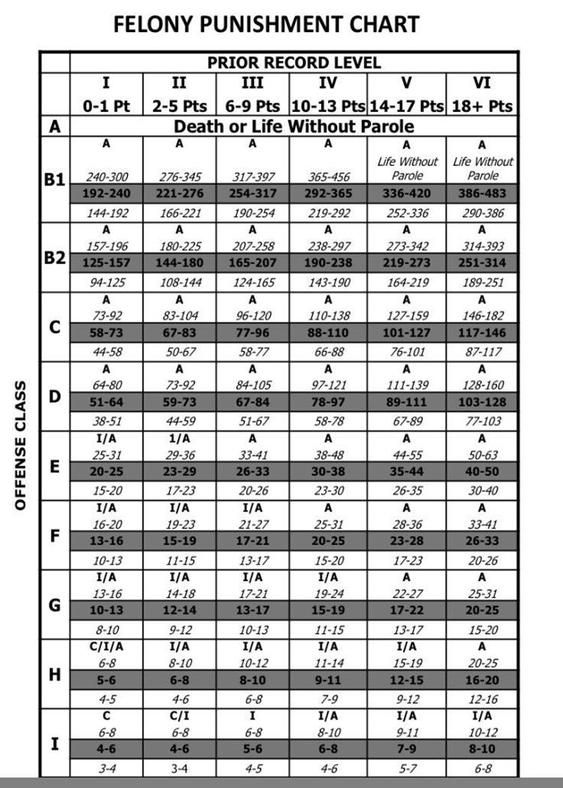
Felonies are more serious crimes resulting in imprisonment up to life and in the case of a capital crime, execution.
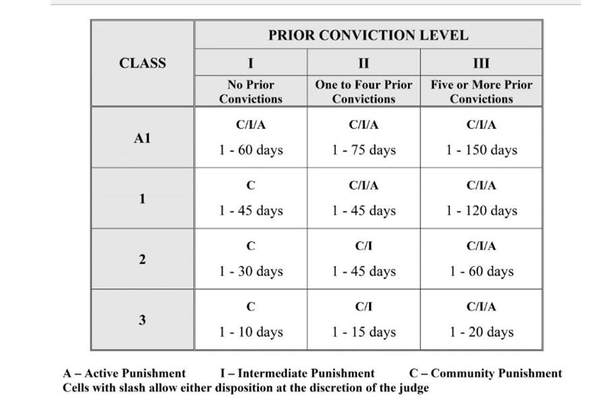
North Carolina enacted a Structured Sentencing Act which provides clear guidelines for punishment of crimes.
Judges consider previous convictions along with aggravating (increases guilt) and mitigating (reduces guilt) circumstances to arrive at a fair sentence.
Crimes are classified as Felonies and Misdemeanors. The bulk of an animal officer’s crimes investigated will be in the misdemeanor category. Felony charges will require the assistance of your local law enforcement agency.
A Misdemeanor is a lessor crime generally resulting in a fine or relatively short imprisonment sentence.
Felonies are more serious crimes resulting in imprisonment up to life and in the case of a capital crime, execution.
North Carolina enacted a Structured Sentencing Act which provides clear guidelines for punishment of crimes.
Judges consider previous convictions along with aggravating (increases guilt) and mitigating (reduces guilt) circumstances to arrive at a fair sentence.
Misdemeanor Sentencing
Felony Sentencing
Elements of Crime
Infractions, criminal and civil offenses all contain specific elements which must be proven beyond a reasonable doubt,
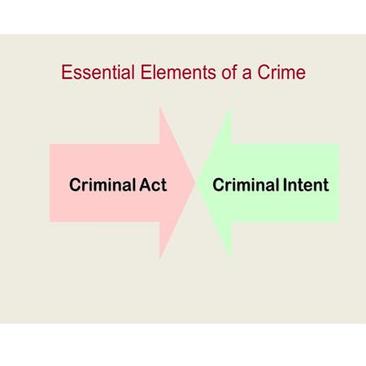
Crimes are composed of 3 basic elements (many more elements and exceptions exist but we will remain with the basics ) of which the prosecution (you) must prove beyond a reasonable doubt. Criminal elements are set forth in the statutes and local law.
Every crime has at least three elements:
- Criminal act, also called actus reus;
- Criminal intent, also called mens rea;
- Concurrence of the two.
Examples of criminal acts:
Abusing an animal
Killing an animal
Stealing an animal
Your manual and ordinances will describe various criminal acts.
Types of Criminal Intent:
Actual Intent: The actual desire to commit the act.
Constructive intent: A reckless disregard for others safety.
Presumed intent: The presumption that a person intended the natural and probable consequences of a voluntary act.
Example:
The intent to kill an animal may be demonstrated by the voluntary movement that caused the death, such as the pointing and shooting of a firearm.
The term conduct is often used to reflect the criminal act and intent elements.
Always identify the elements first, whether they be a state or local law that would conclude to you and the courts a violation did occur.

Let's identify the elements in
§14-361.1. Abandonment of animals.
Any person being the owner or possessor, or having charge or custody of an animal, who willfully and without justifiable excuse abandons the animal is guilty of a Class 2 misdemeanor.
We must first ensure the person is the
Owner
Can you prove the animal is owned by the person? Can you obtain a receipt of purchase, redemption from a shelter,
microchip registration, rabies certificate, etc? Is there a witness that can testify the animal has been owned by this
person?
Possessor
Can you prove the person is the possessor?
Actual possession refers to the physical presence of an animal.
Constructive possession refers to knowledge of the animal and exercising control
over the animal.
Criminal possession refers to an illegal possession of the animal (stolen, etc.).
Charge or Custody
Both terms are very similar in definition meaning charge and control of an item of property.
Can you prove the person in question has or had the ability to make decisions regarding the animal? This could be
an animal caregiver such as a neighbor left to care for an animal, an animal facility manager, even someone who took
up a stray, kept it for a time them abandoned the animal.
Now that we established the "person". let's move on to the elements
mens rea - intent
Willfully
Can you prove the act was willful?
This element is very subjective and largely depends on the context if not defined in the statute. Willful generally signifies a sense of the deliberate as opposed to the unplanned and the voluntary opposed to being compelled. Will you be able to prove the person in question had the intent to deliberately abandon the animal?
Example:
A couple traveling through 3 states to for a very important appointment took a break from driving at a highway rest stop. They are traveling with their dog and when the dog is leashed and taken out for a potty break, the dog runs off. They search and call for an hour but their dog doesn't return. They are on a timetable and must make the appointment and are already late. They have to drive off. That evening, the caretaker of the rest stop reports the dog who made it's way into the restroom area. The animal officer scans the dog for a microchip and identifies the owner who lives 2 states away.
The officer contacts the owner and considers charging for abandoning the dog. After speaking with the owner and verifying the appointment the owner was duty bound to make the officer concluded the owner did not willfully abandon the dog.
Had no Justifiable Excuse?
A “justifiable” excuse can be closely tied to the willfulness of a crime and if charged it is ultimately determined by
the judge hearing the case. Each court is different. The circumstances surrounding the dog left at the rest stop may qualify as a justifiable excuse or may not.
Examples of justifiable excuses include mental incapacity, mistake of law (person unaware of the law), duress,
necessity, self-defense, provocation, and entrapment.
actus rea - the act
Abandon
To intentionally and permanently give up, surrender, leave, desert, or relinquish all interest in an animal (property).
Can you prove the person intentionally decided to give up the animal permanently?
After identifying elements you will then need to obtain the evidence to prove the elements exist. (burden of proof)
§14-361.1. Abandonment of animals.
Any person being the owner or possessor, or having charge or custody of an animal, who willfully and without justifiable excuse abandons the animal is guilty of a Class 2 misdemeanor.
We must first ensure the person is the
Owner
Can you prove the animal is owned by the person? Can you obtain a receipt of purchase, redemption from a shelter,
microchip registration, rabies certificate, etc? Is there a witness that can testify the animal has been owned by this
person?
Possessor
Can you prove the person is the possessor?
Actual possession refers to the physical presence of an animal.
Constructive possession refers to knowledge of the animal and exercising control
over the animal.
Criminal possession refers to an illegal possession of the animal (stolen, etc.).
Charge or Custody
Both terms are very similar in definition meaning charge and control of an item of property.
Can you prove the person in question has or had the ability to make decisions regarding the animal? This could be
an animal caregiver such as a neighbor left to care for an animal, an animal facility manager, even someone who took
up a stray, kept it for a time them abandoned the animal.
Now that we established the "person". let's move on to the elements
mens rea - intent
Willfully
Can you prove the act was willful?
This element is very subjective and largely depends on the context if not defined in the statute. Willful generally signifies a sense of the deliberate as opposed to the unplanned and the voluntary opposed to being compelled. Will you be able to prove the person in question had the intent to deliberately abandon the animal?
Example:
A couple traveling through 3 states to for a very important appointment took a break from driving at a highway rest stop. They are traveling with their dog and when the dog is leashed and taken out for a potty break, the dog runs off. They search and call for an hour but their dog doesn't return. They are on a timetable and must make the appointment and are already late. They have to drive off. That evening, the caretaker of the rest stop reports the dog who made it's way into the restroom area. The animal officer scans the dog for a microchip and identifies the owner who lives 2 states away.
The officer contacts the owner and considers charging for abandoning the dog. After speaking with the owner and verifying the appointment the owner was duty bound to make the officer concluded the owner did not willfully abandon the dog.
Had no Justifiable Excuse?
A “justifiable” excuse can be closely tied to the willfulness of a crime and if charged it is ultimately determined by
the judge hearing the case. Each court is different. The circumstances surrounding the dog left at the rest stop may qualify as a justifiable excuse or may not.
Examples of justifiable excuses include mental incapacity, mistake of law (person unaware of the law), duress,
necessity, self-defense, provocation, and entrapment.
actus rea - the act
Abandon
To intentionally and permanently give up, surrender, leave, desert, or relinquish all interest in an animal (property).
Can you prove the person intentionally decided to give up the animal permanently?
After identifying elements you will then need to obtain the evidence to prove the elements exist. (burden of proof)
Due Process
Due process is a constitutional right guaranteed by the 5th and 14th Amendments:
The 5th Amendment provides due process rights to citizens:
No person shall be held to answer for a capital, or otherwise infamous crime, unless on a presentment or indictment of a Grand Jury, except in cases arising in the land or naval forces, or in the Militia, when in actual service in time of War or public danger; nor shall any person be subject for the same offence to be twice put in jeopardy of life or limb; nor shall be compelled in any criminal case to be a witness against himself, nor be deprived of life, liberty, or property, without due process of law; nor shall private property be taken for public use, without just compensation.
The 14th Amendment (Section 1) provides for all states to afford due process to citizens:
All persons born or naturalized in the United States, and subject to the jurisdiction thereof, are citizens of the United States and of the State wherein they reside. No State shall make or enforce any law which shall abridge the privileges or immunities of citizens of the United States; nor shall any State deprive any person of life, liberty, or property, without due process of law; nor deny to any person within its jurisdiction the equal protection of the laws.
Due process is a constitutional right guaranteed by the 5th and 14th Amendments:
The 5th Amendment provides due process rights to citizens:
No person shall be held to answer for a capital, or otherwise infamous crime, unless on a presentment or indictment of a Grand Jury, except in cases arising in the land or naval forces, or in the Militia, when in actual service in time of War or public danger; nor shall any person be subject for the same offence to be twice put in jeopardy of life or limb; nor shall be compelled in any criminal case to be a witness against himself, nor be deprived of life, liberty, or property, without due process of law; nor shall private property be taken for public use, without just compensation.
The 14th Amendment (Section 1) provides for all states to afford due process to citizens:
All persons born or naturalized in the United States, and subject to the jurisdiction thereof, are citizens of the United States and of the State wherein they reside. No State shall make or enforce any law which shall abridge the privileges or immunities of citizens of the United States; nor shall any State deprive any person of life, liberty, or property, without due process of law; nor deny to any person within its jurisdiction the equal protection of the laws.
Due process legal procedures must give notice, be fair and followed uniformly for each individual to
ensure against prejudicial or unequal treatment.
Ownership interest in animals affords the owners due process rights in connection with exercising ownership. This generally includes a right to a notice and an opportunity to be heard prior to any governmental action or taking.
Citizens have the right to be put on notice that his/her conduct is criminal. Violators may be issued a warning or other notice stating the nature of the violation and its’ authority (State law or local ordinance violation). Most animal ordinances include a process of warnings or abatement orders informing of the violation. Notices, fines and other forms should cite the statutory or local law authority on it's face.
ensure against prejudicial or unequal treatment.
Ownership interest in animals affords the owners due process rights in connection with exercising ownership. This generally includes a right to a notice and an opportunity to be heard prior to any governmental action or taking.
Citizens have the right to be put on notice that his/her conduct is criminal. Violators may be issued a warning or other notice stating the nature of the violation and its’ authority (State law or local ordinance violation). Most animal ordinances include a process of warnings or abatement orders informing of the violation. Notices, fines and other forms should cite the statutory or local law authority on it's face.

Probable Cause
Probable Cause is used to describe acts involving factual and practical considerations of everyday life. Probable cause exists where the facts and circumstances within the officer’s knowledge and of which the officer has reasonably trustworthy information sufficient to warrant a person of reasonable caution in the belief that an offense has been or is being committed.
Essentially, probable cause means reasonable grounds or reasonable suspicion.
There is no hard and fast definition of probable cause or reasonable suspicion. The culmination of information and evidence and the ability to judge the relevancy and credibility of the information and evidence should support a reason to believe a crime has been committed.
Some questions to consider:
Is the information given from a trustworthy source?
Are you comfortable with your level of knowledge surrounding an incident to make a decision?
Is the evidence or information collected in a legal manner?
Criminal vs. Civil
Criminal violations are considered offenses against the state, or society as a whole. Criminal law violations are prosecuted by the state (District Attorney) who files charges against the accused (defendant) as a representative of the state.
Civil offenses deal with disputes between one private entity and another. A civil case begins when a plaintiff (prosecution) claims that another person or entity (defendant) failed to carry out a legal duty owed to the plaintiff constituting an injury or loss. Some examples are personal and injuries, breach of contract or slander.
A significant distinction between civil and criminal cases is the burden of proof necessary to provide for a conviction.
The burden of proof is the duty to prove, or disprove a fact.
Criminal cases require a higher standard of evidence to prove beyond a reasonable doubt the crime was committed by the defendant.
Beyond a reasonable doubt means the the only doubts are unreasonable.
Civil cases are dependent on a preponderance of evidence which is based on convincing evidence and its probable truth or accuracy. An example of one clearly knowledgeable witness or a signed agreement with definite terms may provide a preponderance of evidence over a dozen witnesses with hazy or speculative testimony,
A preponderance of evidence is described as enough (weight) evidence to make it more likely than not that the fact is true.
Civil cases may involve animal custody, death or injury to an animal, animal bites and other situations involving private parties and damages.
As a government officer you will rarely be involved in a civil case. If you receive a request to participate in any civil case you should immediately contact your supervisor or legal counsel for your jurisdiction.
Criminal offenses and civil offenses are different in terms of their punishment. As discussed earlier, criminal cases may have jail time as a potential punishment, whereas civil cases generally only result in monetary damages or orders to do or not do something. Note that a criminal case may involve both jail time and monetary punishments in the form of fines.
Criminal violations are considered offenses against the state, or society as a whole. Criminal law violations are prosecuted by the state (District Attorney) who files charges against the accused (defendant) as a representative of the state.
Civil offenses deal with disputes between one private entity and another. A civil case begins when a plaintiff (prosecution) claims that another person or entity (defendant) failed to carry out a legal duty owed to the plaintiff constituting an injury or loss. Some examples are personal and injuries, breach of contract or slander.
A significant distinction between civil and criminal cases is the burden of proof necessary to provide for a conviction.
The burden of proof is the duty to prove, or disprove a fact.
Criminal cases require a higher standard of evidence to prove beyond a reasonable doubt the crime was committed by the defendant.
Beyond a reasonable doubt means the the only doubts are unreasonable.
Civil cases are dependent on a preponderance of evidence which is based on convincing evidence and its probable truth or accuracy. An example of one clearly knowledgeable witness or a signed agreement with definite terms may provide a preponderance of evidence over a dozen witnesses with hazy or speculative testimony,
A preponderance of evidence is described as enough (weight) evidence to make it more likely than not that the fact is true.
Civil cases may involve animal custody, death or injury to an animal, animal bites and other situations involving private parties and damages.
As a government officer you will rarely be involved in a civil case. If you receive a request to participate in any civil case you should immediately contact your supervisor or legal counsel for your jurisdiction.
Criminal offenses and civil offenses are different in terms of their punishment. As discussed earlier, criminal cases may have jail time as a potential punishment, whereas civil cases generally only result in monetary damages or orders to do or not do something. Note that a criminal case may involve both jail time and monetary punishments in the form of fines.
This animated video that does a pretty good job of explaining the differences between civil and criminal law.
Here is another short video explaining reasonable doubt and the burden of proof.
Statute of Limitations
The statute of limitations is the period of time after which no prosecution can be initiated.
Misdemeanor crimes have a two year statute of limitations; except in the case of some malicious misdemeanors. A malicious misdemeanor is one committed with malice and a bad motive. If you have evidence a misdemeanor crime occurred within the two year time period, charges may be filed. After that time period charges may not be filed.
Felony crimes have no statute of limitation in North Carolina.
Ordinance Misdemeanors
In Section 3 we reviewed the ordinance making power and enforcement authorities of cities and counties. Cities and counties may also provide for criminal enforcement of ordinances.
§ 14-4 Violation of local ordinance misdemeanor.
Violation of a local ordinance may be charged as a misdemeanor. However, most local ordinance enforcement is in the nature of a penalty, or fine. If a violator is charged criminally for an ordinance violation the same burden applies as any other criminal case would. Most jurisdictions enforce animal ordinances as a civil violation and impose penalties. Some agencies have charged chronic, or serious violators criminally when penalties and fees have failed to correct a situation.
Citations
Civil ordinance violations requiring a penalty be issued are commonly termed “citations”. Only a sworn law enforcement officer may issue a criminal citation requiring the recipient to appear in court. If you have received a traffic citation, you were served a criminal citation. Civil citations may be issued by non sworn personnel. In either case they would follow the contents described in this statute:
§15A-302. Citation.
should suffice.
Civil ordinance violations requiring a penalty be issued are commonly termed “citations”. Only a sworn law enforcement officer may issue a criminal citation requiring the recipient to appear in court. If you have received a traffic citation, you were served a criminal citation. Civil citations may be issued by non sworn personnel. In either case they would follow the contents described in this statute:
§15A-302. Citation.
- Date
- Person issued
- Violation – Citing the section of ordinance/law
- Identify the animal(s)
- Officer issuing
- Penalty and time period in which to pay
- Violator’s signature
should suffice.
- Citing of the authority to issue.
Criminal Summons
A Criminal Summons is used to direct the accused to appear in court for an alleged crime. Summons can be used when there is not a need for a speedy resolve. Failure to vaccinate against rabies or chronic violation of the animal ordinance are a few examples to summon a violator to court. If the person summoned does not appear contempt of court charges and/or a warrant for arrest may be filed by the court.
Contempt of court: Actions which either defy a court's authority, cast disrespect on a court, or impede the ability of the court to perform its function. Failing to show up for court impedes the ability of the court.
A Criminal Summons is used to direct the accused to appear in court for an alleged crime. Summons can be used when there is not a need for a speedy resolve. Failure to vaccinate against rabies or chronic violation of the animal ordinance are a few examples to summon a violator to court. If the person summoned does not appear contempt of court charges and/or a warrant for arrest may be filed by the court.
Contempt of court: Actions which either defy a court's authority, cast disrespect on a court, or impede the ability of the court to perform its function. Failing to show up for court impedes the ability of the court.

| criminal_summons.pdf |
Arrests
An arrest may only be carried out by a sworn law enforcement officer and the warrant for arrest must be served within 180 days. If an arrest is made for an animal crime a search and seizure warrant is still required to seize animals and other property.
An arrest may only be carried out by a sworn law enforcement officer and the warrant for arrest must be served within 180 days. If an arrest is made for an animal crime a search and seizure warrant is still required to seize animals and other property.
Search and Seizure
Search and Seizure warrants have been mentioned throughout this section and will in other sections. The search and seizure process directs a sworn law enforcement officer to search a specific area for specific items connected to a specific crime.
This process when carried out, is termed the "execution" of the warrant.
Animal officers who are not sworn officers will need to assist the sworn officers in the search if they do not generally prosecute animal crimes. Many times, it will be the animal officer who will provide the probable cause for the warrant and details for the warrant itself.
In most instances the warrant will include evidence such as animals, animal paraphernalia and accessories associated with the crime. Relevant evidence can involve a wide array and size of items and animals, dead and alive.
In the case of large search and seizure operations, humane organizations may be called in to assist. The planned seizure of large numbers of animals and items requires planning and expert resources that most North Carolina jurisdictions do not have.
Applications for search and seizure warrants are presented to a magistrate, a clerk of court or judge. Some jurisdictions allow non sworn officers to apply for the warrant, others will not. In either case only a sworn officer may execute the warrant.
When pursuing a search and seizure warrant, or any other warrant for that matter, the applicant (you) must provide your probable cause (PC) to the official. If your probable cause is adequate a search and seizure warrant will be issued and executed by sworn law enforcement.
If obtaining your the warrant yourself, be prepared with XXXXXXXXXXX
Search and Seizure warrants have been mentioned throughout this section and will in other sections. The search and seizure process directs a sworn law enforcement officer to search a specific area for specific items connected to a specific crime.
This process when carried out, is termed the "execution" of the warrant.
Animal officers who are not sworn officers will need to assist the sworn officers in the search if they do not generally prosecute animal crimes. Many times, it will be the animal officer who will provide the probable cause for the warrant and details for the warrant itself.
In most instances the warrant will include evidence such as animals, animal paraphernalia and accessories associated with the crime. Relevant evidence can involve a wide array and size of items and animals, dead and alive.
In the case of large search and seizure operations, humane organizations may be called in to assist. The planned seizure of large numbers of animals and items requires planning and expert resources that most North Carolina jurisdictions do not have.
Applications for search and seizure warrants are presented to a magistrate, a clerk of court or judge. Some jurisdictions allow non sworn officers to apply for the warrant, others will not. In either case only a sworn officer may execute the warrant.
When pursuing a search and seizure warrant, or any other warrant for that matter, the applicant (you) must provide your probable cause (PC) to the official. If your probable cause is adequate a search and seizure warrant will be issued and executed by sworn law enforcement.
If obtaining your the warrant yourself, be prepared with XXXXXXXXXXX
The example file below contains an Application for a Search Warrant (probable cause) as a result of a lengthy animal neglect case, with repeated visits for a period spanning almost a year.
The animal officers were not allowed a consent search and previous violations did not establish the evidence required for a search warrant until the owner allowed the officer to enter the property to contain stray horses. The officer was legally allowed on the property and his new observations, along with a well documented background of animal neglect the Search Warrant was awarded.
Consent Searches will be discussed in Section 6, Investigations.
As applications describing probable cause and items and animals to be seized can become quite lengthy, attachments can be provided in many cases.
The animal officers were not allowed a consent search and previous violations did not establish the evidence required for a search warrant until the owner allowed the officer to enter the property to contain stray horses. The officer was legally allowed on the property and his new observations, along with a well documented background of animal neglect the Search Warrant was awarded.
Consent Searches will be discussed in Section 6, Investigations.
As applications describing probable cause and items and animals to be seized can become quite lengthy, attachments can be provided in many cases.
| pc_for_search_warrant.pdf |
| sw_1048_limer_town_road_-_selee_residence.pdf |
| search_warrant.pdf |
The search and seizure warrant must be executed by a sworn officer within 48 hours of its’ issuance. If this does not occur, the warrant must be returned as “Not Executed” to the clerk of court and the process repeated if necessary.
If the warrant is executed, the warrant is also returned to the clerk of court along with the Inventory of items seized.
A copy of the warrant is also provided to the person who is to be searched or who is apparently in control of the premises to be searched.
Meticulous preparation and attention to detail when seizing, caring and safekeeping animal and object evidence is a task never to be left to the last moment. You can not over prepare.
A written account of all items seized must be listed on the Inventory of Items Seized Pursuant to Search. A copy of the inventory is provided to the person and to the issuing official within 48 hours of the seizure.
If the warrant is executed, the warrant is also returned to the clerk of court along with the Inventory of items seized.
A copy of the warrant is also provided to the person who is to be searched or who is apparently in control of the premises to be searched.
Meticulous preparation and attention to detail when seizing, caring and safekeeping animal and object evidence is a task never to be left to the last moment. You can not over prepare.
A written account of all items seized must be listed on the Inventory of Items Seized Pursuant to Search. A copy of the inventory is provided to the person and to the issuing official within 48 hours of the seizure.
| inventory_of_items_seized.pdf |
After the search and seizure is performed the evidence collected must be protected following the Chain of Custody. We will discuss the Chain of Custody in Section 6,Investigations.
Watch this video of a search and seizure executed at a breeding operation with the help of Humane Society of the United States. Visualize the detail and manpower required in seizing, examining and cataloging each animal, each accessory, document, sales and purchase receipts and other items taken as evidence to be listed on the Inventory.
Watch this video of a search and seizure executed at a breeding operation with the help of Humane Society of the United States. Visualize the detail and manpower required in seizing, examining and cataloging each animal, each accessory, document, sales and purchase receipts and other items taken as evidence to be listed on the Inventory.
Judicial Forms
Criminal summons, arrest warrants and other judicial forms are found at the North Carolina Administrative Office of the Courts. These are easily obtained at the North Carolina Judicial Branch website below.

Civil Remedies